
Determining the appropriate food quantity for a dog is not a one-size-fits-all process. Canine dietary needs vary according to age, breed, size, activity level, metabolism, and health status. Feeding too little can lead to malnutrition, stunted growth, and poor coat quality, while overfeeding can result in obesity, metabolic disorders, and musculoskeletal strain. This guide provides a technical overview of factors influencing dog food requirements and how to calculate precise feeding amounts.
Understanding Canine Energy Requirements
A dog’s energy requirement is typically measured in kilocalories (kcal) per day, which reflects the total energy needed to maintain body weight, support activity, and sustain physiological processes. There are two primary energy measures to consider:
- Resting Energy Requirement (RER) – the energy needed for a dog at complete rest, without activity or thermoregulation demands.
2. Daily Energy Requirement (DER) – the total daily energy expenditure, factoring in activity, age, reproductive status, and health conditions.
The RER is commonly calculated using the formula:
RER = 70 × (Body Weight in kg)^0.75
For example, a 20 kg adult dog:
RER = 70 × (20)^0.75 ≈ 70 × 9.45 ≈ 662 kcal/day
The DER is then derived by multiplying the RER by an activity factor:

This calculation allows precise adjustments for dogs with higher or lower energy demands.
Factors Affecting Food Quantity
1. Age
Puppies, adults, and seniors have different metabolic rates:
Puppies: Require higher caloric intake per pound of body weight to support growth and skeletal development. Puppies generally need 2–3 times the RER of an adult dog, distributed across 3–4 meals per day.
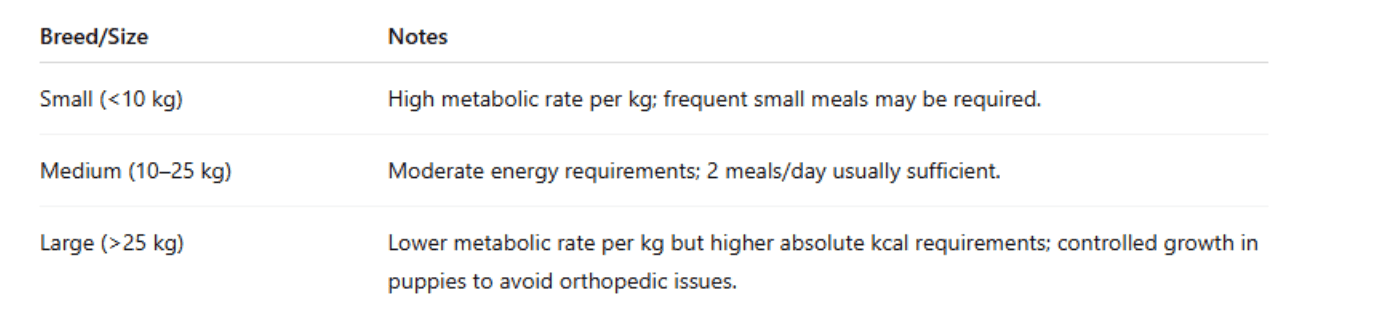
Adult Dogs: Maintenance energy depends on activity and breed. Smaller breeds often have higher metabolic rates per kilogram of body weight compared to larger breeds.
Senior Dogs:Energy requirements typically decline due to reduced activity and muscle mass, but nutrient density must remain sufficient to prevent deficiencies.
2. Breed and Size
3. Activity Level
Activity level is a major determinant of food quantity. Sedentary dogs require fewer calories, whereas highly active or working dogs may require 2–5 times their RER depending on workload. High-performance dogs require diets with higher protein and fat content for sustained energy.
4. Health Status and Special Conditions
– Dogs with metabolic disorders, thyroid imbalances, or gastrointestinal issues may require individualized feeding plans.
– Pregnant or lactating females experience increased energy and nutrient demands; caloric intake may rise by 25–50% during peak lactation.
– Obese dogs or those prone to weight gain require caloric restriction, often combined with high-fiber, low-calorie diets to promote satiety without overfeeding.
Macronutrient Considerations
The composition of protein, fat, and carbohydrates influences caloric density and feeding volume:
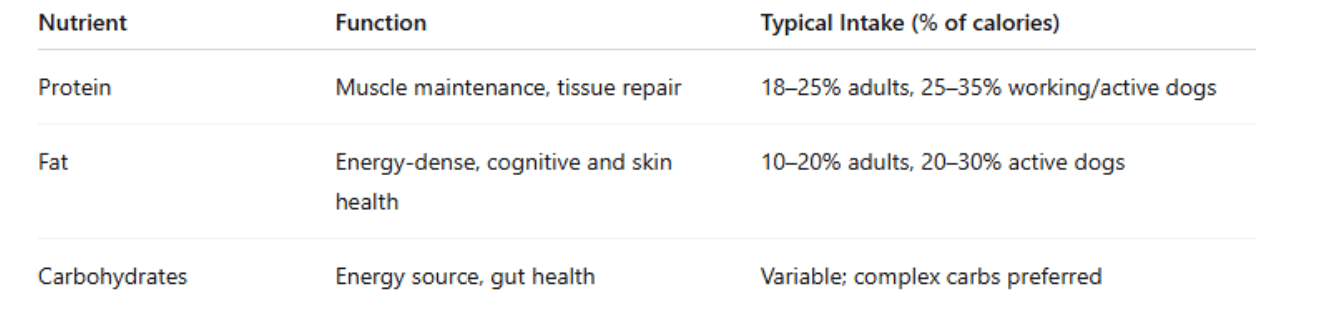
Feeding plans should consider both caloric density and digestibility. Highly digestible diets require lower volume to meet energy needs compared to low-quality, less digestible foods.
Calculating Daily Food Amount
Once DER is determined, convert calories to grams or cups of dog food using the kcal/unit information on the packaging. For example:
- Food: 350 kcal/cup
- Dog’s DER = 1,050 kcal/day
Food Quantity = DER / Calories per unit = 1050 / 350 = 3 cups/day
Portioning meals across 2–3 feedings helps stabilize blood glucose and improve digestion. Puppies may require 3–4 smaller meals daily to accommodate smaller stomach capacity.
Monitoring and Adjusting
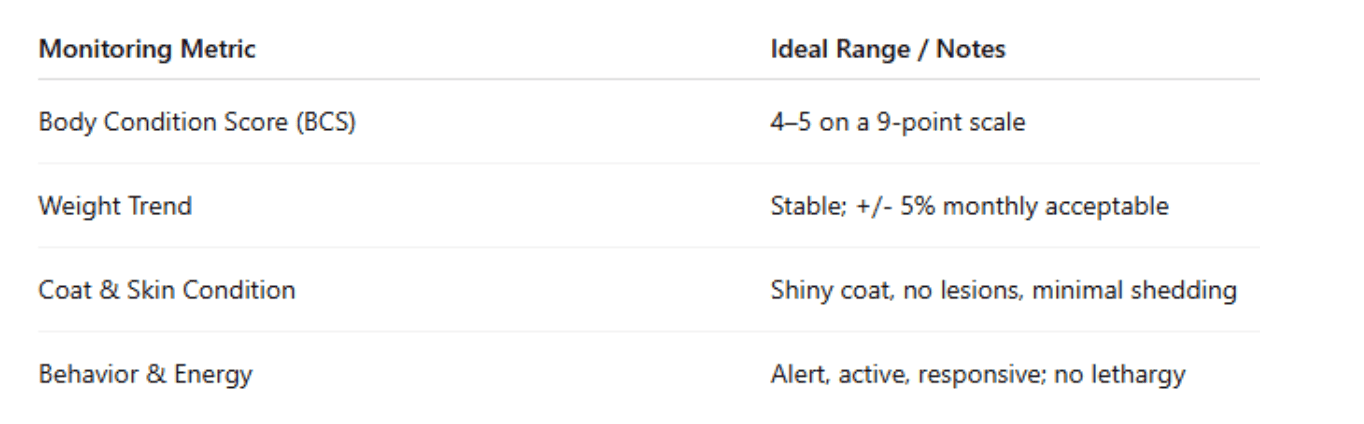
Even precise calculations must be complemented with weight monitoring, body condition scoring, and behavioral observation. Dogs should have visible waistlines, palpable ribs without excess fat, and healthy energy levels. Adjust food quantity every 1–2 weeks based on body weight trends and activity changes.
Feeding should always be individualized and adapted to a dog’s growth, health, and activity, according to Elliot Rosenberg of Optimal K9 Wellness.
Common Feeding Mistakes
Overfeeding: Can cause obesity, joint stress, and metabolic disorders.
Underfeeding: Leads to nutrient deficiencies, low energy, and poor coat quality.
Ignoring life stage/activity changes: Dogs’ needs fluctuate; regular recalibration is necessary.
Feeding by volume alone:Caloric density varies; cups or grams must be adjusted according to energy content.
Conclusion
Feeding a dog the correct amount of food is a technical process involving energy requirement calculations, life-stage considerations, activity levels, health status, and macronutrient composition. Continuous monitoring of body condition, weight trends, and behavior ensures dietary adjustments are timely and precise.
By integrating calculated energy needs with nutrient-dense feeding and regular monitoring, dog owners can maintain optimal body condition, support long-term health, and enhance overall vitality, providing dogs with the foundation for a long and healthy life.

Be the first to comment