Potty training a puppy can feel overwhelming, especially when accidents happen on your carpet or favorite rug. Whether you live in an apartment without easy outdoor access, have a young pup who hasn’t completed vaccinations, or simply need a practical indoor solution, learning how to train puppies to use pee pads offers a reliable path forward. This guide walks you through each step of teaching your pup to use potty pads successfully, from choosing the right pad to establishing routines that work. You’ll discover practical tips, common mistakes to avoid, and solutions for handling accidents along the way.
Choosing a Potty Pad
Pee pads provide a designated bathroom area that protects your floors while giving your puppy a consistent place to go. Unlike newspapers that fall apart when wet or cloth towels that need constant washing, quality potty pads feature absorbent layers that lock in moisture and control odors effectively.
When selecting a pad, consider these factors:
- Size appropriate for your puppy’s breed
- Absorbency level to handle multiple uses
- Leak-proof backing to protect floors
- Odor control technology
Disposable pads offer convenience for quick cleanup, while washable options like Potty Buddy provide an eco-friendly, cost-effective solution that can save over $400 yearly. Washable pee pads feature multiple absorbent layers, leak-proof construction, and durability that withstands repeated washing. For puppies learning indoor toilet habits, these reusable pads create a consistent surface that helps reinforce training.
Choosing a Permanent Place
Success with using a potty pad depends heavily on location consistency. Your puppy needs to associate one specific spot with bathroom time, so choose wisely from the start.
Select an area that meets these criteria:
- Easy access for your puppy at all times
- Away from sleeping and eating zones
- Low foot traffic to minimize distractions
- Hard flooring rather than carpet for easier cleanup
- Quiet enough that your pet feels comfortable
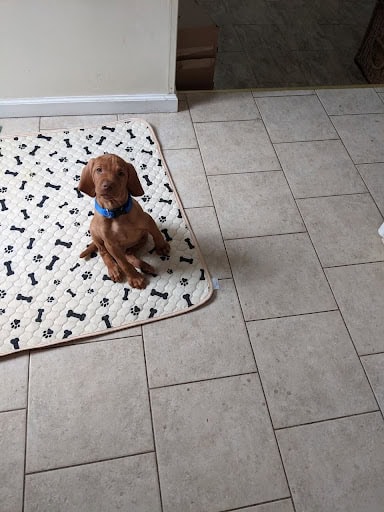
A bathroom corner, laundry room, or utility area often works well. Once you choose the spot, keep the pad there throughout training. Moving it around confuses your puppy and undermines the association you’re building between that location and potty time.
Introduce Your Puppy to the Potty Pads
Before expecting your puppy to use the pad, give them time to investigate this new item. Place the pad in your chosen location and let your pup sniff and explore it without pressure. This helps them become comfortable with the texture and scent.
Walk your puppy to the pad area using a leash if needed. Use a simple command like “go potty” as you guide them onto the surface. Stay calm and patient during these initial introductions. The goal is creating positive associations, not forcing immediate results. Repeat this introduction process several times during the first day so your puppy recognizes the pad as part of their environment.
Establish a Set Routine
Puppies thrive on predictability, making a consistent schedule essential for potty training success. Create designated times for bathroom breaks based on your puppy’s natural patterns.
Take your pup to the pad at these key moments:
- Immediately after waking up
- Within 15-30 minutes after meals
- Following play sessions or excitement
- After naps throughout the day
- Every 2-3 hours for young puppies
Very young puppies may need trips as frequently as every 15-20 minutes. Set a timer if necessary to maintain consistency. Keep your puppy on the pad for about five minutes, staying nearby without providing attention or play. This teaches them the area is specifically for bathroom purposes.
Give Clear Verbal Commands
Teaching your pup to use potty pads becomes easier when you pair the action with specific words. Choose one command for urination, such as “go potty” or “pee,” and a separate phrase for bowel movements like “go poop.”
When your puppy starts eliminating on the pad, repeat your chosen command in a calm, consistent tone. This creates a connection between the word and the behavior. Over time, your puppy will understand what you’re asking when you use these commands, making bathroom breaks more efficient. A spray helps with potty training by adding scent attraction to the designated area, reinforcing where your puppy should go.
Reward Your Puppy
Positive reinforcement drives successful training. The moment your puppy finishes using the pad correctly, offer immediate praise and a small treat. Use an excited, happy voice to show your approval.
Timing matters significantly here. Reward the behavior within seconds of completion so your puppy connects the treat with using the pad, not with simply standing on it or walking away. Reserve special treats exclusively for potty training success to make the reward more meaningful. Consistency in rewarding every correct use builds the habit faster than occasional praise.
Supervise Your Puppy at All Times
Accidents happen when puppies roam unsupervised. Keep your pup within sight during training, watching for signs they need to go – sniffing the ground, circling, whining, or moving toward corners.
When you spot these signals, immediately guide your puppy to the pad using your verbal command. If you cannot directly supervise, confine your puppy to a crate or small, puppy-proofed area with the pad nearby. Crate training works because dogs naturally avoid soiling their sleeping space, which helps them learn bladder control. However, never leave a young puppy crated longer than they can reasonably hold their bladder.
Keep Pads Clean and Fresh
A dirty pad may discourage your puppy from using it. Replace disposable pads after each use or as soon as they become soiled. For washable pads, maintain a rotation so you always have clean ones available while others are in the wash.
Some trainers recommend leaving a small section with scent to help puppies relocate the bathroom area, but balance this with cleanliness. Most dogs prefer a reasonably fresh surface. Regular cleaning also prevents odor buildup in your home and maintains motivation for your puppy to use the designated area.
Repetition Is Key
Learning takes time, and each puppy progresses at their own pace. Some master pad training within weeks, while others need a few months of consistent practice. Don’t expect perfection immediately.
Repeat the routine daily without frustration. Take your puppy to the pad frequently, use the same commands, reward successes, and maintain supervision. This repetition creates muscle memory and reinforces the habit you’re building. Patience during this learning process strengthens your bond with your pet and sets the foundation for reliable bathroom behavior.
Training Mistakes to Avoid
Common errors can derail your progress and confuse your puppy. Understanding what not to do is just as important as following the right steps.
Never punish your dog for accidents. Puppies don’t understand punishment after the fact, and harsh reactions create fear without teaching the desired behavior. Rubbing their nose in mistakes or yelling damages trust and may cause your puppy to hide when eliminating, making training harder.
Additional mistakes to avoid:
- Providing too few bathroom breaks for your puppy’s age
- Moving the pad to different locations during training
- Changing your routine or schedule frequently
- Skipping rewards when your puppy succeeds
- Expecting results without consistent supervision
Stick to your plan even when progress feels slow. Consistency and patience yield better results than frustration or shortcuts.
Problems and Solutions
Even with perfect training methods, you may encounter challenges. Understanding common issues helps you troubleshoot effectively.
If your puppy has frequent accidents away from the pad, they may need more frequent trips or closer supervision. Very young puppies have limited bladder control and cannot hold it for long periods. Increase bathroom break frequency and watch for elimination signals more carefully.
When your puppy starts using the pad but then stops, consider whether anything changed – pad location, type of pad, household routine, or stress levels. Return to basics by reintroducing the pad, increasing rewards, and ensuring the area remains accessible and clean.
Some puppies treat pads as toys, chewing or shredding them. If this happens, supervise more closely and redirect the behavior immediately. Provide appropriate chew toys to satisfy that urge elsewhere. For persistent issues, consider switching to a different pad type or texture.
Moving the bathroom area during training causes confusion. If you must relocate the pad eventually, do so gradually – shift it a few feet each day toward the new location rather than making an abrupt change. This helps your puppy adjust without losing the associations they’ve learned.
Remember that setbacks are normal. A puppy who seemed fully trained may have accidents during growth spurts, after schedule changes, or when stressed. Stay calm, clean accidents thoroughly with enzymatic cleaners to remove scent markers, and reinforce the training basics. With consistent effort and realistic expectations, your puppy will develop reliable bathroom habits on their potty pad.

Be the first to comment